
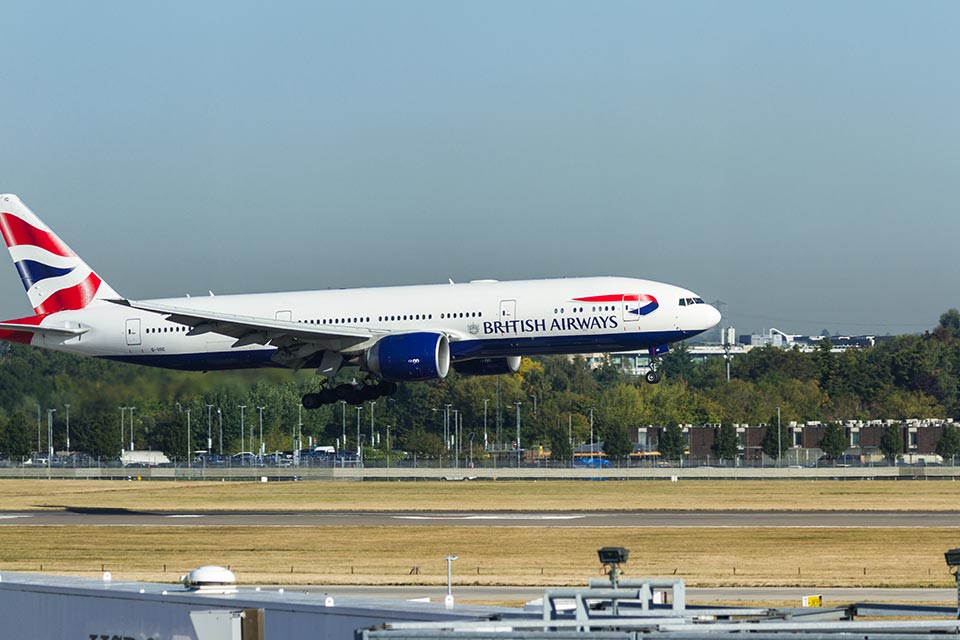
When a partner travels to London alone, an unexplained change of plans, a vague itinerary or unusual secrecy can create difficult questions. For someone living overseas, those concerns may be even harder to resolve. You may have no reliable way of knowing who met your partner at the airport, where they travelled afterwards or whether the stated purpose of the trip was accurate.
In suitable cases, an airport private investigator may be able to establish what happens after a person arrives at Heathrow, Gatwick or another airport serving London. This may include discreetly observing the public arrivals area, confirming whether the person is met by somebody else and documenting onward travel to public locations such as restaurants, offices, transport hubs or hotels.
At SPS Investigations, we provide lawful and discreet private investigation services in London for clients in the UK and overseas. Airport surveillance is carefully planned around a defined objective. It is not an attempt to intrude into every part of somebody’s trip, and a meeting at an airport is not automatically evidence of an affair.
This article reflects English law and official guidance as at July 2026. It provides general information and should not be treated as legal advice. A full list of official references and sources appears at the end.
Can a private investigator see who meets your partner at a London airport?
Potentially, yes. Where there is a legitimate reason for the investigation and the proposed surveillance is necessary and proportionate, an investigator may be positioned in a publicly accessible arrivals area to observe a named person leaving the terminal.
The immediate objective is usually to identify the subject accurately and establish what happens next. An investigator may record whether the subject leaves alone, meets a named or unknown individual, enters a particular vehicle or uses public transport into London.
Any report should distinguish clearly between observed facts and assumptions. For example, an investigator may report that two people embraced, travelled together and entered the same hotel. The report should not automatically describe their relationship as romantic unless the observed behaviour provides a clear factual basis for doing so.
This distinction is important. A colleague, family member, driver or business contact may have a legitimate reason to meet somebody at an airport. Professional surveillance provides information that can help a client make an informed decision, but it should not exaggerate what the evidence proves.
How airport surveillance usually works
Airport surveillance normally begins well before the aircraft lands. We first assess the client’s reason for requesting the investigation, the information available and whether surveillance is a justified and proportionate response.
Where the instruction can be accepted, the planning stage may involve confirming:
- The airport, airline, flight number, departure airport and scheduled arrival time.
- The correct arrival terminal and any known connection or terminal change.
- A recent, clear photograph and physical description of the subject.
- Likely clothing, luggage, travelling companions and distinguishing features.
- Any expected hotel, office, meeting location or transport arrangement.
- The agreed surveillance window, priorities and reporting arrangements.
Public flight information can be monitored for delays, cancellations and terminal updates. However, an investigator does not gain access to airline booking systems, immigration databases, passenger manifests or confidential airport records.
Why airport surveillance requires detailed logistical planning
An airport assignment is not simply a matter of arriving at the scheduled landing time and waiting beside the exit. International travel creates numerous variables, and each one can affect whether continuity is maintained.
Flight delays and early arrivals
A flight may land significantly earlier or later than expected. It may also be diverted, cancelled or assigned a different stand. Investigators therefore need to monitor reliable public flight information and allow sufficient contingency time.
The landing time is not the same as the time a passenger appears in the arrivals hall. The subject may need to pass through immigration, wait for checked baggage, deal with missing luggage or stop before leaving the controlled arrivals area. This can create an uncertain waiting period.
Multiple terminals and exits
Heathrow currently has passenger operations across Terminals 2, 3, 4 and 5. Its official meeting-point information identifies different arrivals locations within each terminal.[11] Gatwick has separate North and South terminals, each with its own layout, transport facilities and onward routes.[12]
An incorrect terminal can make an assignment impossible. Even within the correct terminal, investigators must consider public exits, meeting points, taxi arrangements, car parks and connections to railway or Underground services.
Identifying the correct person
Busy arrivals halls can contain hundreds of passengers, many carrying similar luggage or wearing similar clothing. A current photograph is therefore extremely important. Old, unclear or heavily edited social media images can increase the risk of misidentification.
Investigators must remain cautious where identification is uncertain. A professional report should acknowledge uncertainty rather than attribute another person’s activities to the subject.
Transport changes
A subject may leave by private car, black cab, pre-booked vehicle, coach, train, Tube or a combination of transport. They may also change their apparent plan at short notice.
Following a pedestrian into a railway station requires a different approach from maintaining observation of somebody entering a vehicle. Where appropriate, more than one investigator may be considered to improve coverage, particularly when there are several possible exits or rapid transport changes.
Maintaining continuity from the airport into central London
Continuity means maintaining reliable observation as the subject moves from one location to another. This is often the most demanding part of an airport investigation.
A person arriving at Heathrow might travel towards Paddington, take the Elizabeth line, use the Underground, enter a waiting vehicle or travel directly to a hotel. A Gatwick passenger might use a train towards Victoria, London Bridge or another destination, or leave by car towards London, Surrey or Sussex.
Once the subject enters central London, congestion, one-way streets, crowded stations and rapid changes between walking and public transport can complicate surveillance. Investigators must balance continuity against discretion. Following too closely may compromise the assignment, while remaining too far away may result in the subject being lost.
No reputable investigator should guarantee that uninterrupted surveillance will always be possible. Airport layouts, road conditions, ticket barriers, security controls, crowds and last-minute decisions can all affect the outcome. A factual report should identify any material gap in observation rather than imply that continuity was maintained when it was not.
What can be documented after the airport?
Subject to the circumstances and legal assessment, surveillance may continue to publicly accessible locations. These could include a restaurant, café, office entrance, shopping area, railway station, entertainment venue or hotel reception.
An airport surveillance report may contain:
- Times and locations recorded in chronological order.
- A factual description of the subject and relevant individuals.
- Observed meetings, greetings, journeys and venue entries.
- Vehicle details visible from a lawful location.
- Photographs or video where recording is justified and proportionate.
- Any periods during which observation was lost or identification was uncertain.
Investigators should record what they actually observe. They should not embellish a report, speculate about private conversations or claim to know what happened inside a location that could not lawfully be observed.
Can an investigator follow somebody to a London hotel?
An investigator may sometimes document a person arriving at or entering a hotel from a public place or another lawful location. Depending on the hotel layout and the circumstances, it may also be possible to observe activity in a publicly accessible reception, bar or restaurant.
However, investigators cannot enter a private hotel room, secretly search personal belongings or use deception to obtain a room key. They cannot install recording equipment inside a room or attempt to listen to private conversations.
A hotel is private property. Its management can control access to non-public areas and require somebody to leave. Investigators must comply with lawful instructions from hotel or security staff.
Entering the same hotel does not, by itself, establish what happened afterwards. The evidence may confirm an arrival time, who entered and whether they appeared to travel together, but it should not be presented as proof of events that were not observed.
What information can an airport private investigator not access?
Private investigators do not have police, immigration or border-force powers. A client cannot authorise an investigator to obtain information unlawfully.
We cannot lawfully:
- Access passenger manifests, airline reservations or immigration records without proper authority.
- Hack an airline account, email account, phone, messaging service or travel application.
- Intercept calls, messages or other private communications.
- Impersonate police officers, border officials, airline staff or hotel employees.
- Enter airside security zones, private rooms or restricted premises without lawful permission.
- Place pressure on airport or hotel employees to disclose confidential customer information.
- Harass, threaten, confront or intimidate the subject.
Knowingly or recklessly obtaining or disclosing personal data without the controller’s consent can be an offence under section 170 of the Data Protection Act 2018, subject to the statutory provisions and available defences.[8] Unauthorised access to computer material may also constitute an offence under the Computer Misuse Act 1990.[9]
The Investigatory Powers Act 2016 establishes the legal framework for interception, equipment interference and the acquisition of communications data by bodies with the relevant statutory authority. These are not ordinary powers available to a privately instructed investigator.[10]
Is airport surveillance legal in England?
Airport surveillance is not automatically lawful simply because it takes place in a public arrivals hall. The purpose of the investigation, the methods used, its duration and the way personal information is handled must all be considered.
Surveillance commonly involves processing personal data, including images, location information and written observations. The UK GDPR and Data Protection Act 2018 therefore form an important part of the legal framework.[3][4] The Data (Use and Access) Act 2025 has amended parts of the UK data-protection regime, and the ICO updated its legitimate-interests guidance in March 2026 to reflect those changes.[2][5]
Where legitimate interests is considered as the lawful basis, the ICO explains that organisations should identify the legitimate interest, determine whether the processing is necessary and consider whether the person’s interests, rights and freedoms override that interest. Processing must be targeted and proportionate, rather than excessive.[2]
The data-protection principles also require personal information to be collected for specified purposes, limited to what is necessary, kept accurate and retained securely for no longer than required.[3]
Article 8 of the European Convention on Human Rights, incorporated into UK law through the Human Rights Act 1998, protects respect for private and family life, the home and correspondence. Although the application of the Human Rights Act depends on the legal context, Article 8 forms part of the wider privacy framework that investigators must take seriously.[6]
Repeated or oppressive surveillance may also create harassment or stalking risks. The Protection from Harassment Act 1997 prohibits a course of conduct amounting to harassment, while its stalking provisions identify following a person as conduct that may form part of stalking when the statutory requirements are met.[7]
The ICO approved the first sector-owned UK GDPR code of conduct for investigative and litigation-support services in 2024. The code addresses lawful bases, covert processing, tracking, background checks, data-protection impact assessments and the responsibilities of investigators handling personal information.[1]
You can read more about the broader legal position in our guide to whether private surveillance is legal in England.
How we assess instructions from overseas clients
A client does not need to be physically present in London to discuss an investigation. We can receive enquiries from people living abroad, provided that we can verify the instruction, understand the relationship and establish a legitimate reason for the proposed work.
We may ask for identification, evidence of the client’s connection to the subject and an explanation of the concern. This helps us assess legality, proportionality, safeguarding risks and whether the requested surveillance has a realistic prospect of answering the client’s question.
We also agree the scope in advance. A narrowly defined instruction, such as establishing who meets a subject at Heathrow and documenting their onward journey for an agreed period, is generally clearer than an open-ended request to monitor every aspect of a person’s visit.
Secure communication is particularly important for international clients. Reports and images contain personal information and should only be sent to an authorised recipient using an agreed method. Where information is transferred outside the UK, appropriate data-protection considerations may also apply.
If a client intends to use the findings in legal proceedings outside England and Wales, they should obtain advice from a lawyer in the relevant jurisdiction. The rules governing evidence, privacy and disclosure differ between countries.
When might airport surveillance be appropriate?
Airport surveillance may be worth considering where there is a specific arrival, a clearly identified subject and a genuine question that observation can realistically answer. For example, the client may need to establish whether the subject is met by a particular person or whether their onward movements are consistent with the explanation given for the trip.
It may be less appropriate where the flight details are uncertain, the identification material is inadequate or the request is motivated by revenge, intimidation or coercive control. Surveillance should not become a fishing expedition into somebody’s entire private life.
We will not accept an instruction merely because a client offers to pay for it. If the objective or proposed method appears unlawful, malicious, excessive or unsafe, the work should be refused.
What happens if the subject is not seen?
There are several reasons why a subject might not be observed. The client may have been given the wrong flight, the passenger may have changed their booking, used a different exit, missed the flight or travelled under arrangements unknown to the client.
It is also possible for the subject to be lost after identification because of crowds, security restrictions or a rapid transport change.
A professional report should explain where investigators were positioned, what public flight information was available, how long observations continued and whether any relevant incident affected the assignment. It should not manufacture a conclusion simply because the anticipated meeting did not occur.
Why London knowledge matters
Airport surveillance often continues far beyond the terminal. Familiarity with London’s road network, railway stations, Underground interchanges, hotel districts and busy commercial areas can make a significant difference when plans change unexpectedly.
At SPS Investigations, we are based in London and provide private investigation services throughout the capital and the Home Counties. We understand that airport cases require patience, preparation and realistic contingency planning. Our role is to document relevant facts calmly and accurately, not to sensationalise the situation or promise a predetermined result.
Where the instruction is lawful and proportionate, we can discuss surveillance connected with Heathrow, Gatwick, London City and other airports serving the London area, subject to investigator availability, the information supplied and the practical circumstances of the assignment.
Speak to SPS Investigations confidentially
If you are overseas and concerned that your partner may be meeting somebody during a trip to London, we can assess whether airport surveillance is a suitable and proportionate option.
The more notice and accurate information we receive, the better we can plan for the correct terminal, flight delays, identification and onward travel. However, we understand that some concerns arise at short notice and will explain honestly what may be achievable.
Contact SPS Investigations to discuss your circumstances privately. We will listen to your concerns, explain the legal and practical limitations and provide a clear proposed scope before any work begins.
Airport Private Investigator FAQs
Can a private investigator wait for my partner at Heathrow Airport?
Yes, an investigator may be able to observe a named person leaving a publicly accessible Heathrow arrivals area where the investigation has a legitimate purpose and the surveillance is lawful, necessary and proportionate. The correct flight, terminal and recent identification material are essential.
Can a private investigator conduct surveillance at Gatwick Airport?
Yes, surveillance may be possible at Gatwick’s North or South Terminal. The investigator must know the correct terminal and plan for delays, public exits, railway connections, car parks and other onward transport.
Can an investigator find out whether my partner was on a flight?
An investigator can monitor publicly available flight information and may observe whether the subject emerges from arrivals. They cannot unlawfully access a passenger manifest, airline booking, border record or confidential travel database.
Can a private investigator follow someone from the airport to a hotel?
An investigator may be able to document a person’s journey from an airport to a hotel and observe them entering from a lawful location. They cannot enter a private hotel room or claim to know what happened inside without observable evidence.
Can the investigator take photographs at the airport?
Photographs may be taken where doing so is lawful, necessary and proportionate. Airport rules, security concerns, the location, the purpose of the image and the privacy rights of the subject and other travellers must all be considered.
Will I receive live updates during the surveillance?
Live updates may be agreed as part of the assignment, provided they can be delivered securely and do not distract the investigator at a critical moment. The precise reporting arrangement should be confirmed before deployment.
Does meeting someone at an airport prove infidelity?
No. Meeting another person at an airport does not, by itself, prove infidelity. The individual could be a colleague, friend, relative, driver or business contact. Investigators should report observed behaviour and avoid unsupported conclusions.
Can I hire SPS Investigations if I live outside the UK?
Yes, overseas clients may contact SPS Investigations about a London-based matter. We will need sufficient information to verify the instruction, identify the subject and assess whether the proposed investigation is lawful, proportionate and practically achievable.
How much notice is needed for airport surveillance?
As much notice as possible is helpful because investigators need to verify the flight, terminal, identification material, surveillance window and onward-travel contingencies. Short-notice work may still be considered, but availability and preparation time can affect what is achievable.
Can an airport investigation guarantee that my partner will be followed all day?
No. Ethical investigators should not guarantee uninterrupted surveillance. Crowds, ticket barriers, airport security, road conditions, transport changes and the need to remain discreet can all result in a loss of continuity.
References and Sources
1) Information Commissioner’s Office – New data protection code of conduct launched for UK private investigators:
https://ico.org.uk/about-the-ico/media-centre/news-and-blogs/2024/11/new-data-protection-code-of-conduct-launched-for-uk-private-investigators/
2) Information Commissioner’s Office – Legitimate interests guidance, updated 23 March 2026:
https://ico.org.uk/for-organisations/uk-gdpr-guidance-and-resources/lawful-basis/legitimate-interests/
3) Legislation.gov.uk – UK GDPR, Article 5: Principles relating to processing of personal data:
https://www.legislation.gov.uk/eur/2016/679/article/5
4) Legislation.gov.uk – Data Protection Act 2018:
https://www.legislation.gov.uk/ukpga/2018/12/contents
5) Legislation.gov.uk – Data (Use and Access) Act 2025:
https://www.legislation.gov.uk/ukpga/2025/18/contents
6) Legislation.gov.uk – Human Rights Act 1998, Schedule 1, Article 8:
https://www.legislation.gov.uk/ukpga/1998/42/schedule/1/part/I/chapter/7
7) Legislation.gov.uk – Protection from Harassment Act 1997:
https://www.legislation.gov.uk/ukpga/1997/40/contents
8) Legislation.gov.uk – Data Protection Act 2018, Section 170: Unlawful obtaining of personal data:
https://www.legislation.gov.uk/ukpga/2018/12/section/170
9) Legislation.gov.uk – Computer Misuse Act 1990, Section 1: Unauthorised access to computer material:
https://www.legislation.gov.uk/ukpga/1990/18/section/1
10) Legislation.gov.uk – Investigatory Powers Act 2016:
https://www.legislation.gov.uk/ukpga/2016/25/contents
11) Heathrow Airport – Meeting points and terminal arrivals information:
https://www.heathrow.com/arrivals/meeting-points
12) London Gatwick Airport – North and South Terminal airport maps:
https://www.gatwickairport.com/passenger-guides/airport-maps.html
Worried Your Partner Is Cheating?
We help reveal the truth with confidential investigations.
Get in touch